

A little before I turned 70, I noticed that getting out of a low chair took a real decision, not just a habit. I would lean forward, push on the armrest, and feel my thighs complain in a way they never used to. Standing from the couch became a two step negotiation in my head. I did not want to lose the ability to do that, and I did not want to face it with the only options I thought I had: join a gym I was too self conscious to walk into, or buy heavy weights I could not safely lift in a small living room. That is when a set of WHATAFIT resistance bands with handles showed up, and six months later it is still the reason I can stand from that couch without the pause. This is the honest long run account of how these bands worked for me, done almost entirely seated.
The Quick Verdict
A genuinely useful way to rebuild strength seated at home without heavy weights. The five resistance levels, handles, and ankle straps cover a surprising amount of movement, though the latex smell and door anchor are worth knowing about before you buy.
Amazon Check Today's Price →Ready to rebuild strength without leaving your chair?
If standing from the couch has started to feel like a decision, a set of resistance bands is a gentle, low weight way to start building your legs back up right at home.
Amazon Check Today's Price on Amazon →How I've Used It
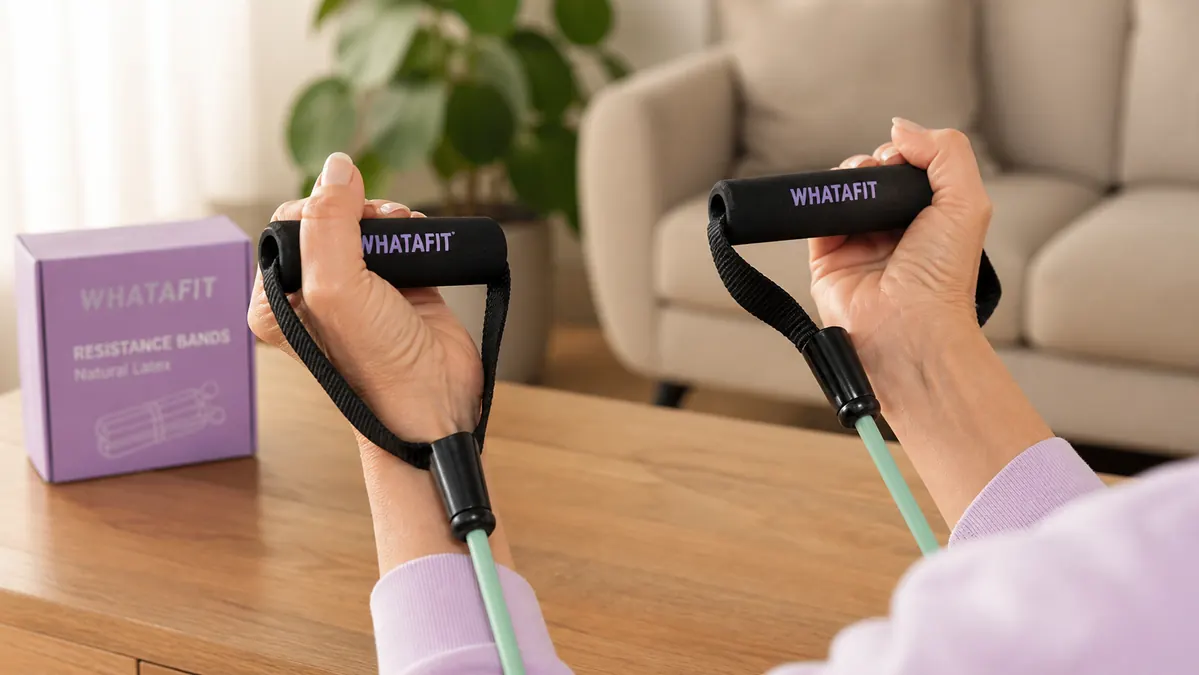
I am 69 and my day is mostly ordinary: cooking, light cleaning, a short walk when the weather lets me, and a lot of time in a chair with a book or a tablet. My legs had grown weak from too much sitting, and my doctor encouraged strength work more than once. But standing routines were hard for me, and holding anything heavy felt risky with my grip. That is why I bought the WHATAFIT resistance bands set. It comes with five bands labeled by resistance, from the lightest at roughly 10 pounds up to heavier ones, two handles with soft foam grips, two ankle straps, a door anchor, and a printed guide. My plan was simple: use it from my chair a few times a week and never once have to stand.
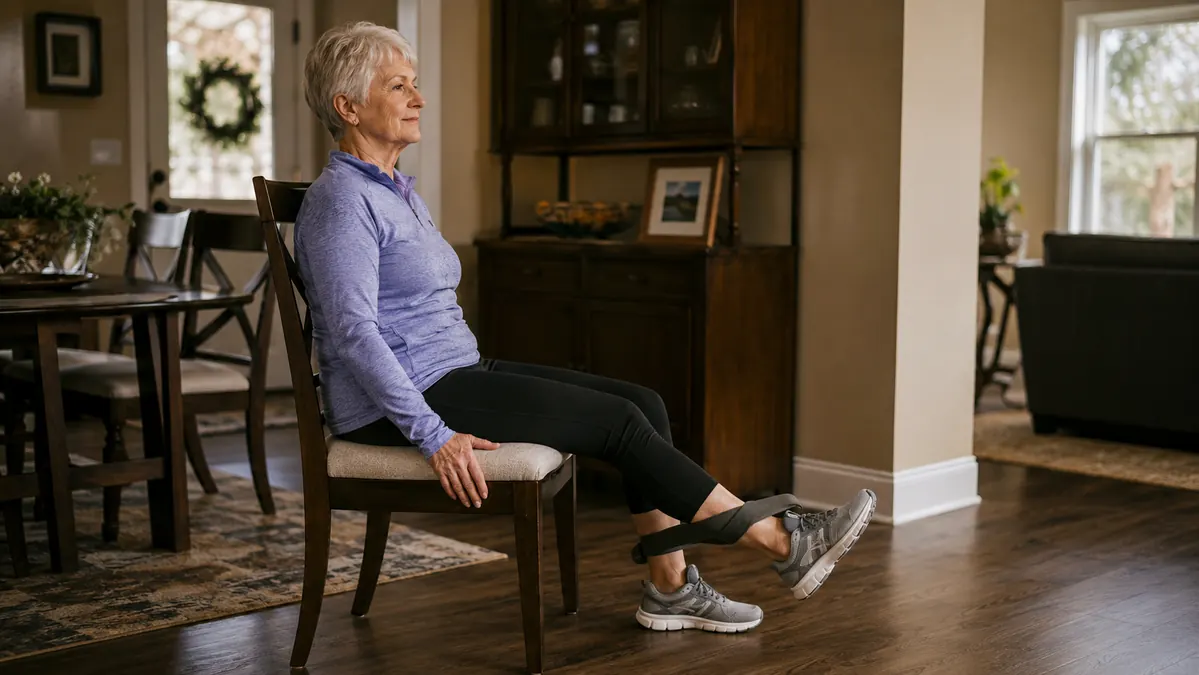
I did not rush it. The first few weeks I stuck to the lightest WHATAFIT band and just learned the movements. I did seated rows by wrapping the band around my foot and pulling the handles back like I was starting a lawnmower, seated leg extensions by looping an ankle strap under my chair leg, and gentle chest pulls in front of me. Fifteen minutes, three days a week, in my usual dining room chair. I kept a little notebook on the side table and wrote down which band and how many repetitions each time, so I could see it was actually going somewhere.
The most important thing I can say before I go further: check with your doctor before you start any new exercise, especially with my history of a replaced knee on the left side and some arthritis in my hands. I cleared the plan with my doctor first and adjusted a couple of the movements to protect that knee. If you have questions about what is safe for you, that conversation is worth more than anything I can tell you, and it kept me from making a mistake.
What the Six Months of Seated Work Did
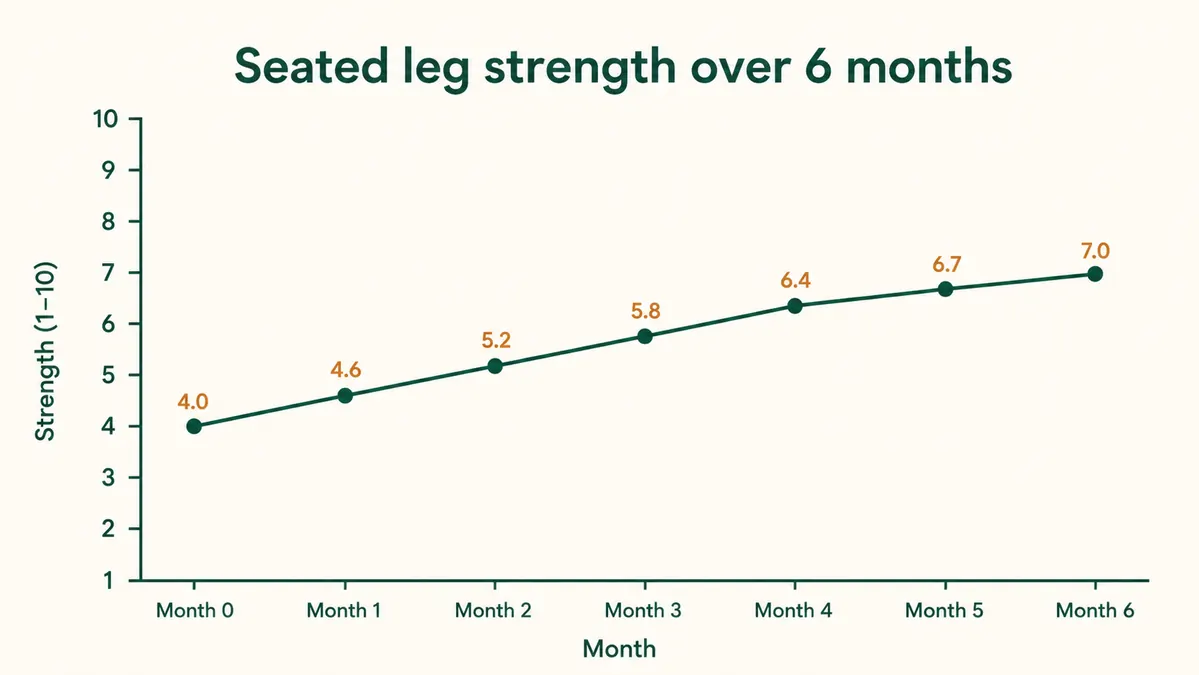
The honest headline is that the strength came back, slowly and measurably. By the end of the first month I could tell I was not straining as hard on the seated rows, so I moved up a band. By month three, standing from the couch was noticeably easier, which is the whole reason I started. I do not want to oversell it, this was not dramatic, but it was real and it happened in a way I could point to in my notebook. The legs that used to hesitate now push me up without the same pause.
The grip strength improved too, which surprised me. Holding those foam handles and pulling steadily a few times a week gave my hands and forearms more staying power than they had in a while. That mattered more than I expected, because opening jars and carrying grocery bags are the everyday tasks that had started to feel shaky. This was a side benefit I did not plan for, but it may be the one I appreciate most.
I will also be honest that not every movement worked for me. The door anchor, meant to let you do standing rows and chest presses against a closed door, was not part of my routine because I did my work seated. The ankle straps were great for leg extensions, but the shoulder and arm movements done standing were ones I mostly skipped. So I got the most out of about half of what the set offers, and that is okay, because the half I used was enough to make a real difference. For anyone weighing bands against heavier options, I wrote out an honest bands vs dumbbells comparison for seated workouts.
By month three, standing from the couch was noticeably easier, and that was the whole reason I started.
Choosing the Right Resistance Level
The part that took me the longest to get right was picking which band to use for which movement. The rule I landed on, after some trial and error, is that a movement should feel challenging by the last few repetitions but not so hard that your form falls apart or you hold your breath. With five bands ranging from light to heavy, that was easy to achieve, and it is genuinely one of the strengths of a set like this. A single band can only offer one strength, so beginners and people who are just getting back to movement benefit from having choices.
I used the two lightest bands for almost everything at first, then gradually moved up as my strength returned. The heavier bands are still waiting in the box for me, which is fine, it gives me somewhere to go. One caution I will repeat because it matters: the band provides progress, but only if the movement stays smooth and steady. Jerking or snapping a band is how you strain something, and it is not worth it. Slow, controlled pulls were what built my strength, not fast ones.
The Parts That Did Not Impress Me
I want to be fair about the downsides, because no product is perfect. The first and most obvious one is the smell. New latex bands have a strong rubber smell when you open the package, and it took a couple of weeks airing out in my hallway before it faded to something tolerable. It is not dangerous as far as I know, but if smells bother you, plan for it. I also found the latex a little grippy and dusty at first, which made the handles feel chalky until they wore in.
The door anchor, which a lot of people buy the set for, was the least useful part for my seated routine, and I would not want it to be the reason you buy. It is a sturdy little strap that hooks under a closed door, but it mostly enables standing movements, which were not my thing. If you plan to do standing rows and presses, it will serve you well. For me it sat in the bag. I am glad it is included for people who need it, but I counted it as unused in my own six months.
One more honest note: the printed guide is simple and helpful, but it is not a full exercise program. It shows you the basics of each movement, which is exactly what I needed to get started, but if you want a whole planned routine you will want to look further. None of these things stopped me, and I kept using the bands the whole six months, but they are real and they shape my score.
The Alternatives I Considered Before Settling
I did not jump straight to these bands. I looked at a few other options first, because I wanted to be sure I was not buying something I would not actually use. The heaviest temptation was a set of light dumbbells, but I ruled them out quickly. My grip is not what it used to be and I have a replaced knee on one side, so holding and controlling free weights felt risky in a way bands never did. They also take up space in a small living room, and I could not see myself dragging a rack out every three days.
I seriously considered one of those compact rowers and even a single heavy resistance band before this set showed up. The rower cost more and took over a corner of the room, and I was not convinced I would stick with it. A single band, on the other hand, gives you only one strength level, and I knew I needed something lighter to start and something heavier as my legs came back. That is what sold me on a set with multiple levels. It meant I could begin where I was comfortable and progress without buying anything new for months.
I also thought about just doing my usual stretching and nothing else, because that is what I had always fallen back on when my legs felt weak. But stretching alone was not rebuilding the strength I had lost, it was only easing the stiffness in the moment. The bands added the resistance part that stretching cannot, and combining a little gentle stretching with seated resistance is what actually moved the needle for me over the six months. Having the whole set made that combination easy, and that is worth saying plainly.
What I Liked
- Rebuilt my leg strength over six months, all done seated in my own chair
- Five resistance levels let you start light and progress slowly
- Foam handles were comfortable on my arthritic hands
- Ankle straps made seated leg work easy and safe
- Bands are easy to store and travel nicely
- No heavy weights or standing required
Where It Falls Short
- New latex bands have a strong rubber smell for the first couple weeks
- Door anchor is geared to standing work, less useful for a fully seated routine
- Printed guide covers basics but not a full exercise program
- Latex bands felt a bit grippy and dusty until they wore in
The legs that used to hesitate when I stood from the couch now push me up without the same pause, and I did it all from a chair.
Who This Is For
This is for the person whose legs have weakened from too much sitting and who wants to do something about it without a gym, without standing, and without heavy weights on their lap. If you are older, have limited mobility, or feel self conscious about starting to exercise, a set like this lowers every one of those barriers. It is gentle enough to begin with the lightest band and thorough enough to keep you progressing for months. And if you are not sure your joints will thank you for it, my ten reasons resistance bands are easy on joints explains why bands are often kinder than weights for stiff, achy bodies.
Who Should Skip It
Skip it if you cannot check with your doctor first or if your condition makes steady pulling unsafe, because no band is worth an injury. Skip it if the latex smell will genuinely bother you, since it lingers for a while and I want you ready for it. And skip it if you were hoping this would be a full gym in a bag, because it is a tool for careful strength building, not a complete replacement for a supervised program. If you want a full seated leg routine built around bands like these, my seated leg strengthening guide walks through it step by step.
A Few Practical Tips for Getting Started
If you decide to try a set like this, let me save you a little of the fumbling I did at the start. First, set a simple, achievable goal rather than a big one. Mine was just three short sessions a week in the dining room chair, and that small commitment was easy to keep, which is the whole point. A routine you stick with for months beats a heroic one you abandon after two weeks. Second, do your first few sessions with the lightest band even if it feels too easy, because the first job is learning the movements without strain, not showing off.
Third, keep the bands where you can see them. I store mine in the bag on the side table next to my chair rather than in a closet, and that gentle reminder is what keeps the habit going on the days I might otherwise skip. And fourth, go slow with the movements at first, especially the ones that pull across your body. A smooth, steady ten repetitions done properly beat twenty done quickly and carelessly. The strength I rebuilt came from control, not from speed, and that is the advice I would pass along more than any other.
One more thing worth knowing: you do not need to be perfect, you need to be consistent enough. Some weeks I managed all three sessions, some weeks only one or two, and it still worked. The worst week is not the one where you skip a day, it is the one where you give up. So forgive yourself the off days, pick the band back up the next evening, and let the small wins pile up. Six months from now you will look back the way I did and notice you simply stand up easier than you used to.
Six months in, these bands still earn their place by my chair
If standing from the couch has become a decision, this set gives you a gentle, seated way to build your legs back up at home. Check the current price and read what other owners say before you decide.
Amazon Check Today's Price on Amazon →