
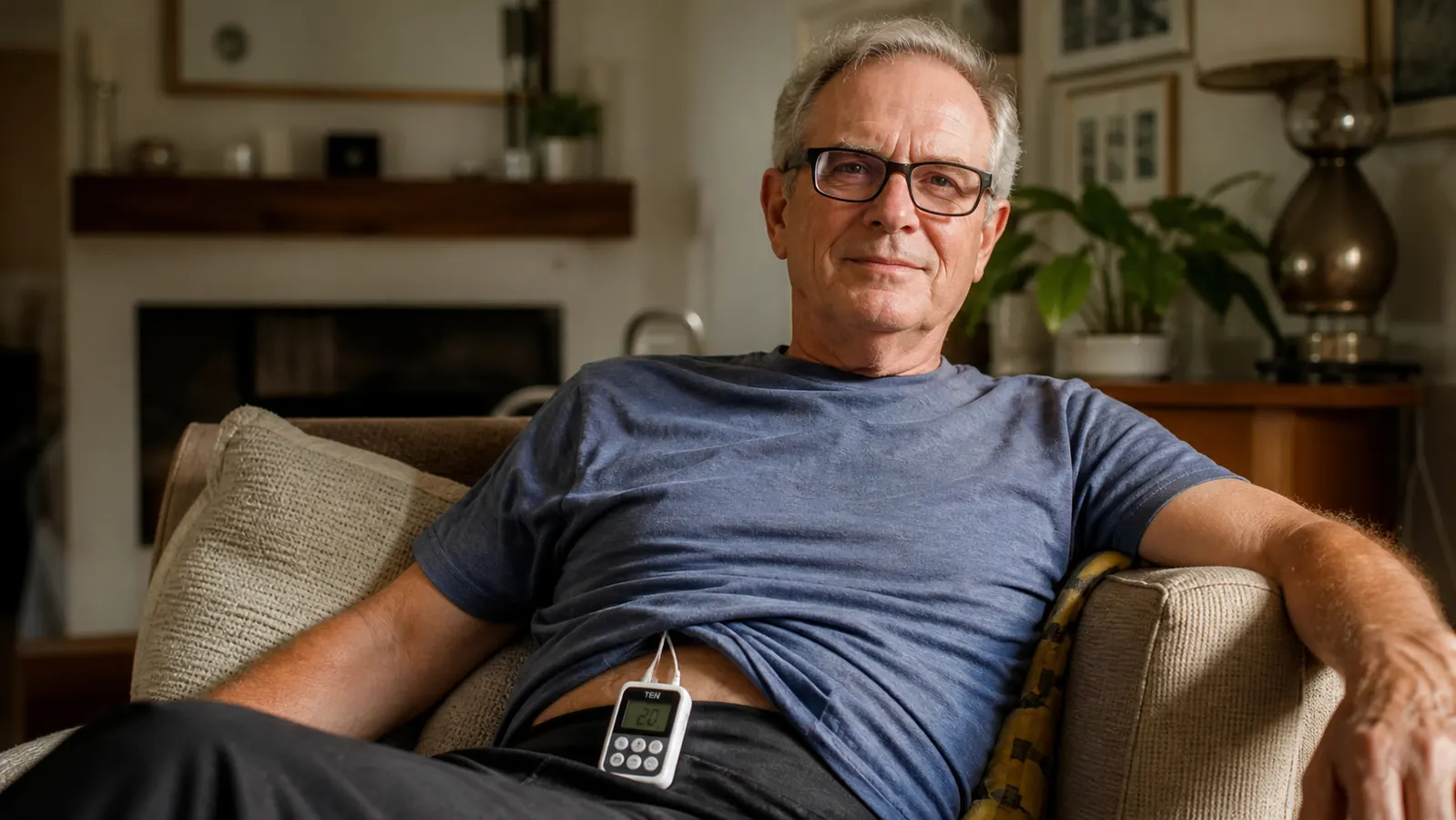
If you have lived with low back pain for a while, you have probably tried the heating pad, the over the counter pills, the stretches you forget to do, and the advice from friends who mean well but were not built the same as you. You have also probably wondered about those little machines with the sticky pads that send a gentle pulse through your back, because they keep showing up in your feed and in the reviews. A TENS unit is not magic, and I will not pretend otherwise. But it is one of the few things I reach for almost every evening now, and it took me a frustrating first week of wrong placements and confusing modes before I figured out what I am about to walk you through.
I am in my early seventies, I sit more than I should, and my lower back announces itself every time I get out of a chair or stand at the kitchen counter too long. My doctor cleared me to try the AUVON TENS unit, and that is the first thing you should do before you read another word. TENS stands for transcutaneous electrical nerve stimulation. It sends a tiny, controlled electrical pulse through the skin to the nerves underneath, and for many people that pulse simply scrambles or crowds out the pain signal long enough for the muscles to relax and the discomfort to settle. It does not fix the underlying problem. It gives you a window of relief, which is often enough to let you move, stretch, or get to bed. This guide is the path I wish someone had handed me on day one, written for someone who is not a gadget person and does not want to hurt themselves figuring it out.
Start with a unit that is easy to read and hard to mess up
The AUVON TENS unit I use has three simple preset buttons, a dial for strength, eight pads in the box, and a long battery. If you are ready to try your first session the gentle way, it is the one I trust.
Amazon Check Today's Price on Amazon →Step 1: Get your skin and pads ready
The single most common mistake I see people make, and the one I made myself, is slapping the pads on dry, lotioned, or hairy skin and wondering why the session feels weak, tingly in the wrong way, or barely noticeable. The pads need clean, dry skin to make good contact, and they need that contact to be even across the whole pad. Before your first session, wash the area of your low back with plain soap and water and dry it completely. Do not use lotion, oil, or cream on that spot, because a greasy layer sits between the pad and your skin and blocks the pulse.
Your skin should also be free of any open wound, rash, sunburn, or broken area. If you have any of those, skip the session that day and give the skin time to heal. Some redness right under the pads after a session is normal, especially the first few times, and it fades within a few hours. If you see actual blistering, welts, or burning, that is a sign the strength was too high or the session too long, and you should stop and let your skin recover before you try again.
The pads themselves need a little care too. The AUVON box comes with eight pads, which is generous, because pads do wear out. When a pad stops sticking well or starts delivering a sharp, uneven tingle instead of a smooth pulse, that is the tell that it is done. Keep the spare set handy and swap them out. I find a fresh pad makes a bigger difference than most people expect, because poor adhesion quietly changes how the session feels.
Step 2: Place the pads on your low back, not on bone
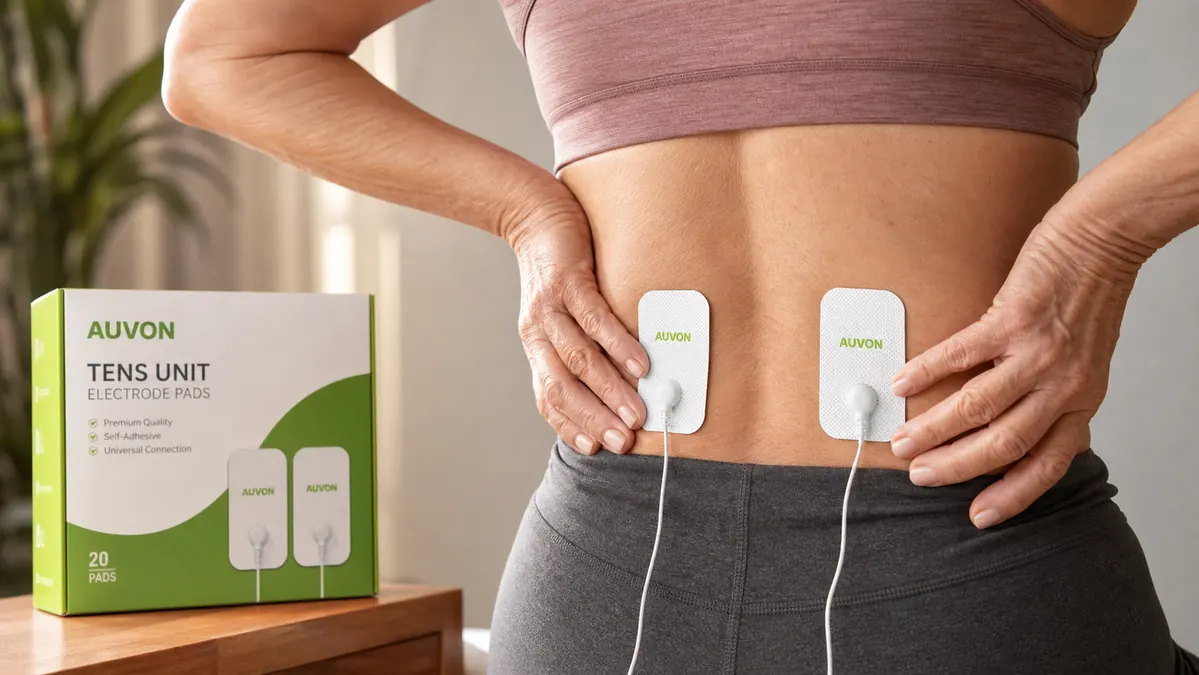
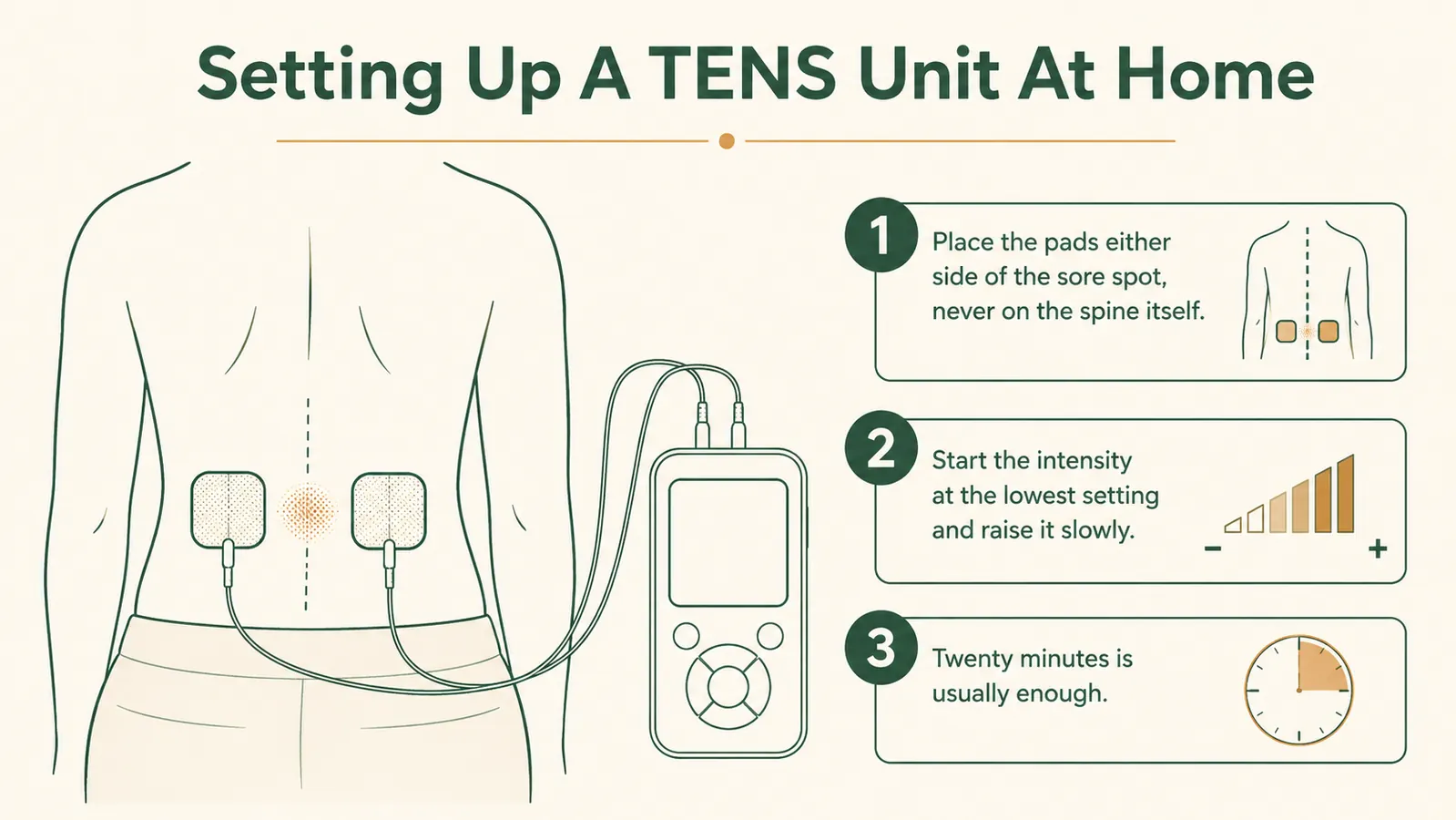
Placement is the other thing that separates a helpful session from a wasted one. The general rule for low back pain is to keep the pads on the muscle, a couple of inches away from the spine, on either side. You do not want a pad sitting directly on the bony parts of your spine or on the top of your hip bone. The pulse should pass through muscle, where it does its relaxing work, not through bone, where it just feels odd and does not help.
A simple way to picture it: place one pad a couple of inches to the left of your lower spine and the second pad a couple of inches to the right, roughly at the level where your pain sits. Some people like the pads stacked vertically along one side of the spine instead, and that can work too, but for a first session you will find the side by side arrangement easiest to manage and the most comfortable. Keep a thumb width or so between the pads. If the pads touch each other, the current takes the short path across the surface of the skin instead of traveling through the muscle, and you essentially lose the whole session.
This is the placement I reached after a week of trial and error, and it is the single most important thing to get right. If the spot does not feel right after a couple of minutes, it is fine to peel the pads off, move them an inch or two, and try again. Reworking the placement is not a failure. It is how you learn your own body, and no two people find the same perfect spot.
Step 3: Start with the lowest strength and the gentlest mode
Here is the rule that will keep you comfortable and safe: you do not need the unit to be strong enough that it hurts. In fact, if it hurts, you have turned it too high. The pulsing should feel like a firm, gentle muscle flutter, sometimes described as a buzzing or a pinching tingle, and it should stay well inside what you would call comfortable. Start at the lowest setting, turn it up slowly in tiny steps, and stop increasing as soon as you feel a strong, clear pulse. Most of my own sessions run at a setting that feels noticeable but never intense.
As for modes, do not let the 24 on the box intimidate you. You do not need to learn all of them. The AUVON unit has three big preset buttons right on the front that cover almost everything anyone needs, and on my unit I mostly lean on the catch-all mode that feels like a steady, rhythmic pulse. A steady low frequency tends to feel soothing for an aching back, while a faster, more active pattern can feel better for a tired muscle. There is no wrong answer, so pick the one that feels pleasant, and if it stops feeling good after ten minutes, try a different one the next session.
One thing no one told me that I want to pass on: the machine remembers your last strength setting. So if you last used it near the top of the range, the next time you switch it on it can start there, which can be a startling jolt when you are not ready. Before every session, make a habit of turning the strength dial all the way down to zero before you press start, then dial it up gently. It takes two seconds and it saves you from a surprise.

Step 4: Run a short, gentle session and time it
For low back pain, especially when you are new to TENS, keep your sessions on the short and gentle side. I aim for about twenty minutes, and I have never needed more than half an hour. You do not get bonus relief from running it longer. In fact, the muscles can start to feel overstimulated, and the skin under the pads can get irritated, if you push a session much past thirty minutes. When the timer stops, take a break and let the area rest before you consider a second round later in the day.
I have found the best times are ones that line up with something I am already doing, so the session does not feel like a chore. I put mine on when I sit down with a book in the evening, or when I settle in to watch television, or right before I get up from a long sit. The beauty of a rechargeable unit is that you can clip it to your waistband and move around a little while it runs. You do not have to lie flat and do nothing. I have run sessions while gently tidying the kitchen, and being up and moving during the pulse seems to help the muscles relax even more.
Consistency matters more than intensity. Using the unit a little bit most days, at a moderate setting, helped me far more than one long, strong session did. My evening routine became twenty minutes with the unit, the book, and a still back, and that predictability is a big part of why it stuck. Twenty quiet minutes a day is a small price to pay for getting out of a chair without wincing.
Step 5: Clean up, store it, and know when to stop
When the session ends, peel the pads off gently and put them back on the clear plastic liner they came on, which protects the sticky surface and keeps them usable longer. Wipe the pads lightly with a barely damp cloth if they pick up any skin oils, and let them dry before you put them away. Do not wash them under running water. Store the whole kit in the little pouch it comes with so the leads do not get tangled or crimped, and keep it where you can reach it easily, because the whole point is that it is quick to use.
There are a few rules worth treating as firm. Never place the pads on your head, face, the front of your neck, your chest, or directly over your heart. Do not use a TENS unit if you have a pacemaker or implantable device, if you are pregnant, or over an area with no sensation. Do not use it while driving, in the bath, or anywhere near water. And if you feel dizzy, lightheaded, or genuinely worse during a session, turn it off, take the pads off, and give your doctor a call. Relief is the goal, but it should never come at the cost of disregarding a clear signal from your body.
What Else Helps Alongside the TENS Unit
A TENS unit works best as one tool in a kit, not the only answer. In my experience the evenings where it helps most are the ones where I have also kept moving during the day, gotten up from my chair every hour or so, and used a few gentle stretching movements that my physical therapist gave me. A heating pad on my back before bed pairs beautifully with a TENS session earlier in the day, because the heat eases stiffness while the TENS settles the sharper discomfort. Staying well hydrated and simply not sitting in one position for hours does more for me than any single gadget. The unit is the part that gave my evenings back, but it earns its place when it is part of a steady routine, not a magic fix on its own.
If you are still deciding between a TENS unit and a massage gun, they are genuinely different tools and one is not automatically better. The massage gun is strong and percussive, which some people love, but it can feel like a lot on a tender older body. The TENS unit is gentler and more hands free, which is why it became my everyday choice. If you want more on that trade off, I wrote a fuller comparison elsewhere on this site, and there is also my honest long term review of the unit after months of daily use, which covers the placement learning curve and what I would do differently.
Consistency helped me more than intensity did. Twenty gentle minutes most evenings did more for my back than one long, strong session ever did.
The unit I still reach for every evening
If my walkthrough sounds like the kind of gentle, honest routine that could work for you too, the AUVON TENS unit is the exact one sitting on my end table. It is rechargeable, comes with eight pads, and has three simple buttons that take the guesswork out of your first session.
Amazon Check Today's Price on Amazon →