
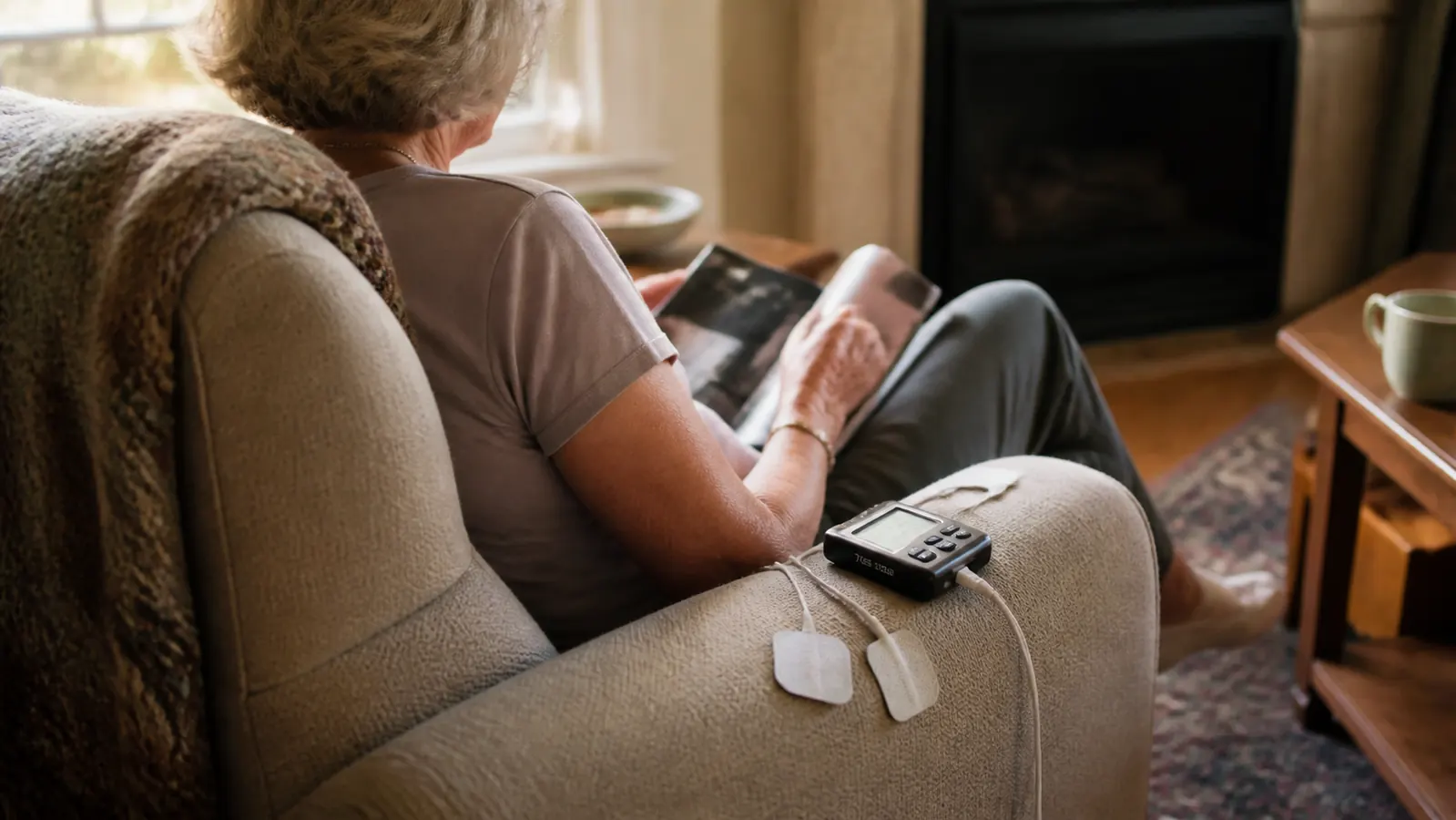
My low back started talking to me around 4:30 most afternoons. It was not a sharp pain, more a dull, wearing ache that settled in behind my right hip and made me want to stay put in my chair until supper. My doctor called it ordinary wear and tear from forty years of a standing job, and she suggested I try an AUVON TENS unit before reaching for anything stronger. I had real doubts. A little box sending electrical pulses through sticky pads sounded like a gadget out of a late-night commercial, not something that belonged in a 72-year-old's living room.
Six months later I reach for that box several evenings a week, and I can say honestly that it earns its spot on my side table. It did not fix my back and it will not fix yours either, but it took the edge off the daily ache in a way that let me keep doing the things I enjoy. This is the long version of that story, the parts nobody puts in the first paragraph of the review, the good and the frustrating, so you can decide if it is worth your money and your patience.
The Quick Verdict
A genuine, drug free helper for everyday muscle and joint ache once you survive the first week of figuring out where the pads go. Not a cure, but real, repeatable relief.
Amazon Check Today's Price →If your back nags you most evenings, this is the gentle place to start
No pills, no mess, and it just sits in a drawer until you need it. See what today's price looks like and whether the AUVON 24 Modes fits your routine.
Amazon Check Today's Price on Amazon →How I've Used It
For the first three weeks I used it almost every evening, around 6:30, right when my back was at its worst. I would sit in my recliner, put on my reading glasses, and fiddle with the pads until I found a spot that felt right. The AUVON unit came with eight electrode pads and a set of lead wires that plug into two channels, so I ran one pair low on my back and one pair across my shoulders. Twenty minutes felt like the sweet spot for me, enough to settle things down without the tingling turning into anything uncomfortable.
The battery charge lasted me between four and five evenings of twenty-minute sessions before it needed a top-up, which surprised me. I expected to be charging it daily. After the first month I settled into a steadier rhythm of three or four nights a week, mostly because I found I did not need it as often. That is the part that made me a believer, the ache slowly became less of a daily visitor and more of an occasional one.
I kept a little spiral notebook for the first few weeks, writing down which intensity level and which rhythm I used and how my back felt the next morning. That turned out to be the single most useful thing I did. The unit has 24 modes and a dial for intensity, which sounds overwhelming, but the plain pulsing mode was the one I kept coming back to. Trying one setting at a time and writing it down saved me a lot of guesswork.
The Unit Itself: Simple and Sturdy
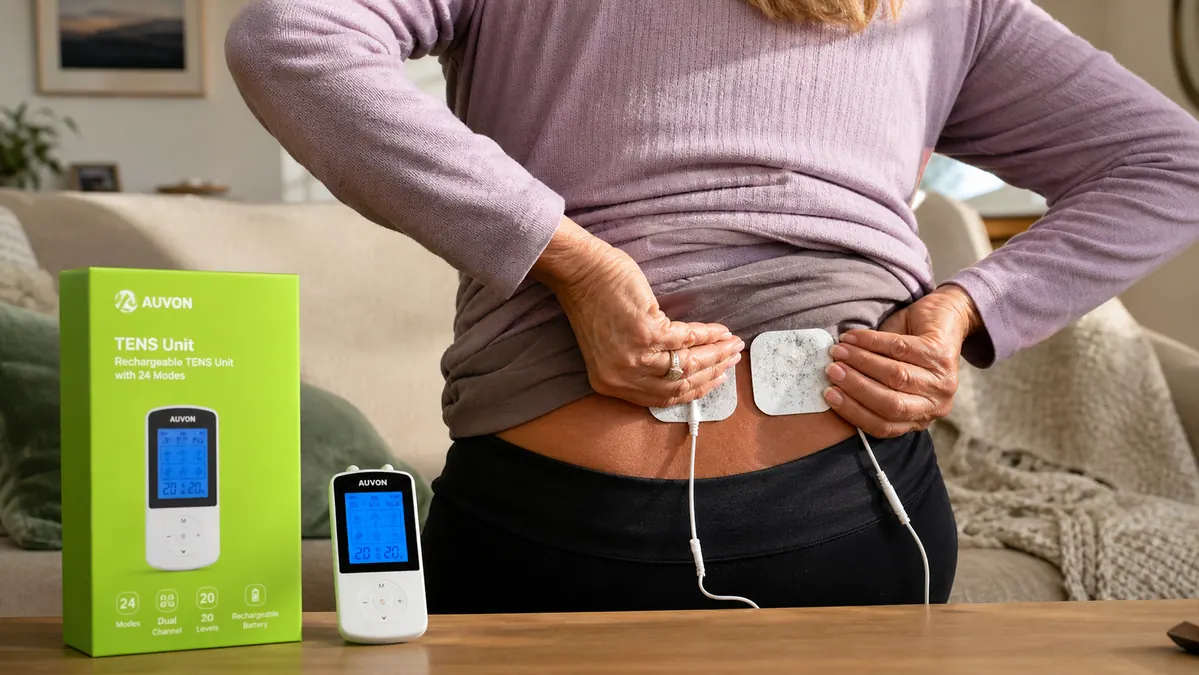
The AUVON TENS unit is small enough to rest in the palm of my hand, and the controls are laid out plainly. Two big channel buttons, a power button, and a separate key to lock the screen so I could not bump the settings while I sat. The little screen shows the mode and intensity in numbers I can actually read without craning forward, which matters more to me at my age than it might to a younger person.
Eight electrode pads ship in the box, which is generous, because pads wear out. I had read complaints that pads stop sticking after a few uses, and I found that partly true. They stick well for the first several sessions, but once the gel picks up lint and skin oils you notice them slipping. A few drops of water on the sticky side revived mine for another week or two, and an extra pack of pads was cheap enough that I bought a spare set right away. Plan for that and you will not be annoyed by it.
The build feels solid rather than flimsy. The wires click in firmly and have not frayed after six months of being coiled and uncoiled, stuffed in a drawer, and carried in my overnight bag on a trip. For a little plastic device at its current price, it holds up better than I expected. The only awkward part is that the unit itself has no clip or belt holster, so you either set it beside you or tuck it in a pocket while the wires run up to the pads.
What It Actually Did for My Back
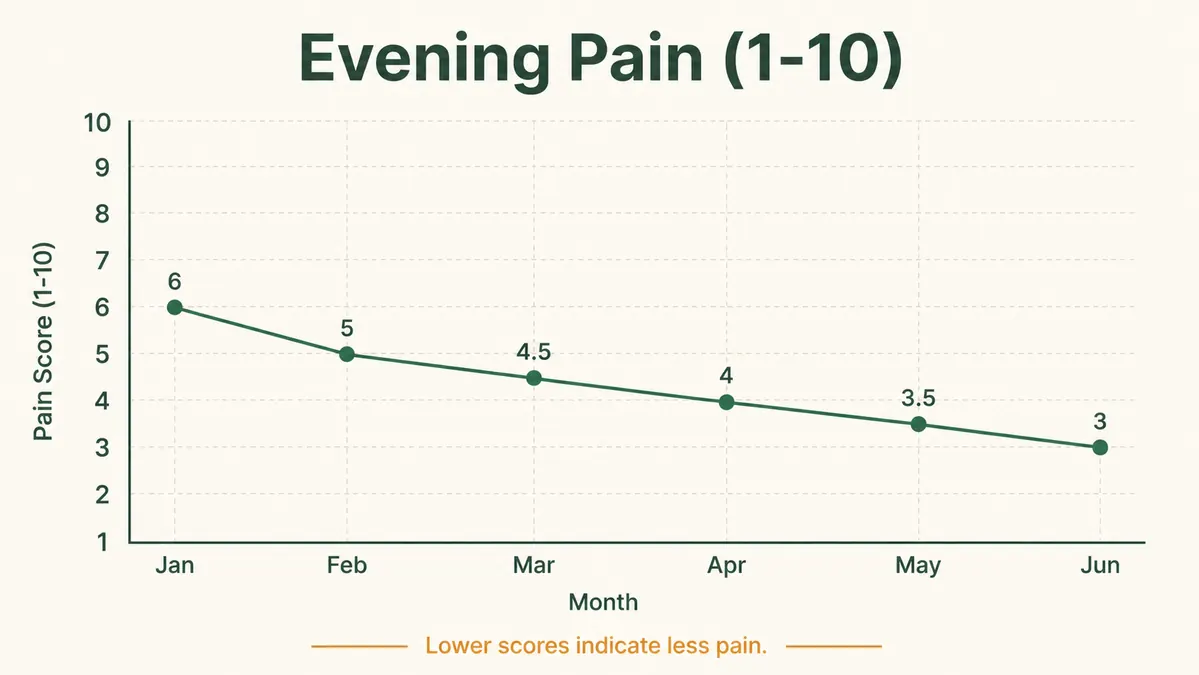
Here is the honest part. A TENS unit does not fix the thing that is wrong with your back, and anyone who tells you it does is overselling. What it does is interrupt the pain signal on its way to your brain, which for me meant the ache faded to a dull background hum while the unit was on, and often stayed quieter for a good hour or two after I took it off. I wrote my evening pain down for six months, and my own chart showed a slow, steady drop from a regular 6 out of 10 down to a 3 or 4 on most nights.
The relief was best on my low back and shoulders. My knees, which are the other problem spot, got almost nothing from it, and that is worth knowing before you buy. For achy joints deep inside a knee, the pulse just seemed to skate over the surface. For tight, worn muscles in my lower back, it genuinely helped me relax enough to fall asleep instead of lying there counting the ache. It became my evening wind-down, a quiet signal to my body that the day was done.
I never found it a cure, and there were nights it barely touched the pain at all, especially after an unusually busy day. But the nights it worked outnumbered the nights it did not by a wide margin. That consistency, more than any single dramatic session, is why it stayed plugged in and charged on my side table rather than ending up in the donation box with my other halfway gadgets.
One thing I want to add about expectations. The relief is not instant in the way a pill is. The first two or three sessions I was underwhelmed, honestly, because I expected a dramatic jolt and instead got a modest tingle that took a few minutes to build. The payoff came with repetition. By week four I stopped comparing it to a medicine and started treating it like the slow, quiet habit it really is, and that is when my evening scores started to fall and stay down.
The nights it worked outnumbered the nights it did not by a wide margin, and that steady consistency is why it earned a permanent spot on my side table.
The Pads and Placement Learning Curve
I want to be straight with you about the hardest part, because it is the reason some people quit in the first week. Figuring out where to put the pads is a genuine learning curve, and the instructions are not much help beyond basic diagrams of a generic back. The pads need to sit on the meat of the muscle, straddling the sore area, and on my lower back I found the sweet spot was not exactly where I first guessed. The first few sessions were more fiddling than relief.
What finally worked was starting at a very low intensity, below where I could comfortably feel it, then slowly turning the dial up over a few minutes until I felt a strong but not painful tingle. I also learned that skin needs to be clean and dry or the pads slip and the pulse feels uneven. Shaving or trimming any hair where the pads go makes a real difference too, and that was not in any instruction booklet. Once I figured all of that out, a five-minute setup became routine.
For anyone who hates fiddly things or has trouble reaching their own low back, I will tell you honestly that this part is harder. A helper makes the first few placements much easier. But once you have your spots marked, it is a simple matter of pressing the same pads on the same places, and the whole setup and session takes me about twenty-five minutes from start to finish.
What I Tried Before This
I did not buy this AUVON TENS in a vacuum. My drawer was already full of the usual suspects: a heating pad that felt wonderful for ten minutes then got too hot, a rolling ball massager I could never quite position, and a tube of cream that left my hands smelling for hours. Each one helped a little, and none of them helped the way I wanted. The heating pad was my closest competitor, and I still keep it for cold mornings. But where the heat only masked things while it was on, the TENS unit seemed to keep my back quieter for longer after the session ended.
If you are trying to decide between a TENS unit and a percussion massage gun, that choice is real, and my honest answer is that they do different jobs. The massage gun pounds tight muscle, which is great for a knot in your shoulder but can be too much for a sensitive older back. The TENS unit is gentler and better suited to an ongoing dull ache you want to quiet down in a chair. For my situation, the TENS unit won. You can read the full breakdown here if you are weighing both.
What I Liked
- Real, repeatable relief for low back and shoulder ache, not a one-week gimmick
- Rechargeable battery that lasted me four to five sessions per charge
- Eight pads in the box and simple, readable controls
- Small, sturdy, and easy to take along on a trip
- Drug free, with no smell and no mess
Where It Falls Short
- The pad placement learning curve is real and can frustrate beginners
- Did almost nothing for my deeper knee joint pain
- Pads lose their stick fairly quickly and need replacing
- No belt clip, so you juggle the unit and the wires during a session
- The full 24 modes are mostly noise, I used the same plain pulse every time
I wrote my evening pain down for six months, and my own chart showed a slow, steady drop from a regular 6 out of 10 down to a 3 or 4 on most nights.

Making It a Simple, Habitual Part of the Evening
The biggest reason this little unit still sits on my side table, while my other gadgets gather dust, is that I slowly worked it into the rhythm of my evening instead of treating it as a special occasion. I paired it with a fixed cue, sitting down after the supper dishes with a book, so reaching for the pads stopped being a decision and became just part of settling in for the night. On the nights my back was quiet I skipped it without guilt, and that made it easier to keep using on the nights it was not. A tool that fits the shape of your day is a tool you keep using, and this one fit mine.
If you are new to it, I would tell you to give it a fair month before you judge it. The first week is all learning curve and a modest tingle, and it is easy to conclude it does nothing. By the second and third week, once you have your pad spots marked and your favorite setting dialed in, the sessions become quiet and familiar, and that is when the relief became dependable for me. Set the unit up the same way each time, keep the pads in the same place, and let the repetition do the work. Consistency turned a gadget I almost returned into the thing I reach for most evenings.
The honest verdict: worth trying if your ache is muscle, worth skipping if it is only deep joint pain
It quietly earned its place in my evening routine without a single pill. Check today's price and read the fine print for yourself.
Amazon Check Today's Price on Amazon →Who This Is For
This is for the person sitting in their chair right now with a dull, wearing ache in their lower back or shoulders, the one who has tried the cream and the heat and the pills and still cannot quite find a comfortable evening. It is especially good for older adults who want something gentle, drug free, and easy to fall asleep beside, and who are willing to spend a little patience in the first week learning where the pads go. If that sounds like you, and your doctor has no reason to warn you off, this little unit is a reasonable and affordable thing to try. It will not fix the underlying problem, but it can give you back a quieter, more relaxed hour at the end of the day.
Who Should Skip It
Skip this if your pain is deep in a joint such as your knee or hip, because in my experience TENS barely scratched that surface. Skip it if you have a pacemaker or other implanted device, or if you are pregnant, because TENS is not safe in those situations no matter how gentle it feels. And skip it if the whole idea of sticky pads, wires, and a small screen feels like more trouble than your pain is worth, because the setup learning curve is real and it will sit in your drawer. There are simpler tools for those cases, and I have written about a few of them, including why some people end up preferring a massage gun for their own recovery tools.