
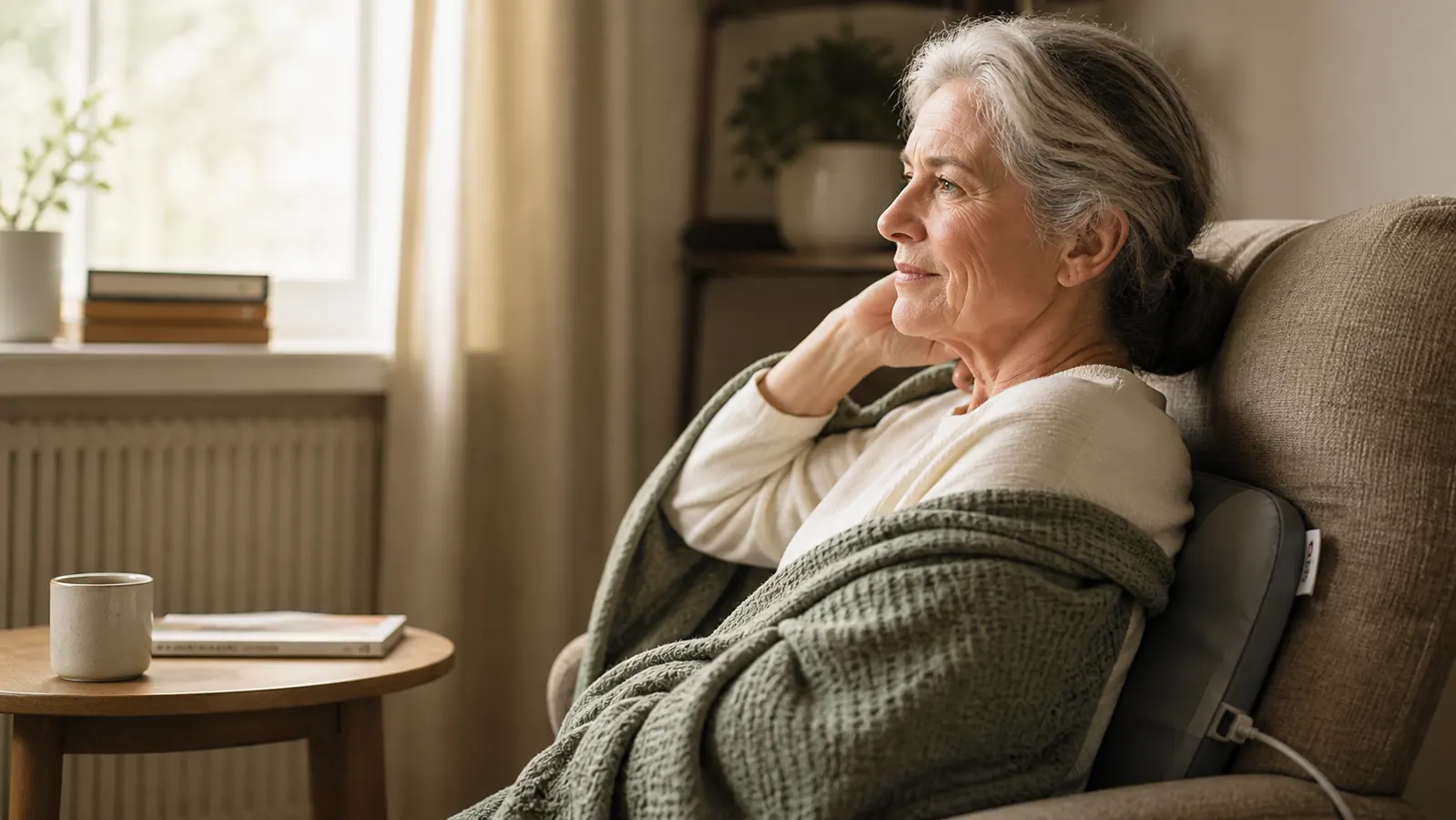
Around 6:30 most mornings I sit on the edge of the bed for a quiet minute before I push up, because my heating pad is already warming on the nightstand and my lower back is stiff from the night the way it has been for a few years now. My doctor calls it plain muscle tightness with a little arthritis in the works, nothing dramatic, just the drawn-out aches of getting older. For a long time I figured the only answers were a pain pill or toughing it out. Then my physical therapist, a younger woman named Maya, told me something that sounded too simple to help. She said most people misuse heat, and the tool is rarely the problem. It is almost always the way we use it, the heat set too high, the pad left on too long, or placed over the wrong spot. When I finally stopped doing it my way and started doing it hers, the same GENIANI electric pad that had barely touched my back started to actually do something.
I wrote this guide because the mistakes are easy to make and the product pages never tell you about them. Every box says plug in, set it, and relax, and that part is true. What nobody prints on the box is that heat works best inside a narrow sweet spot, warm enough to relax the muscle and bring in blood flow, but never so hot that you redden or blister your skin. Get the time right, get the placement right, and keep the session short, and a basic electric pad is enough for most tense backs and shoulders. This is the safe routine I settled on, step by step, so you can skip the trial and error I went through.
A Simple Electric Pad That Gives You the Safe 20-Minute Routine
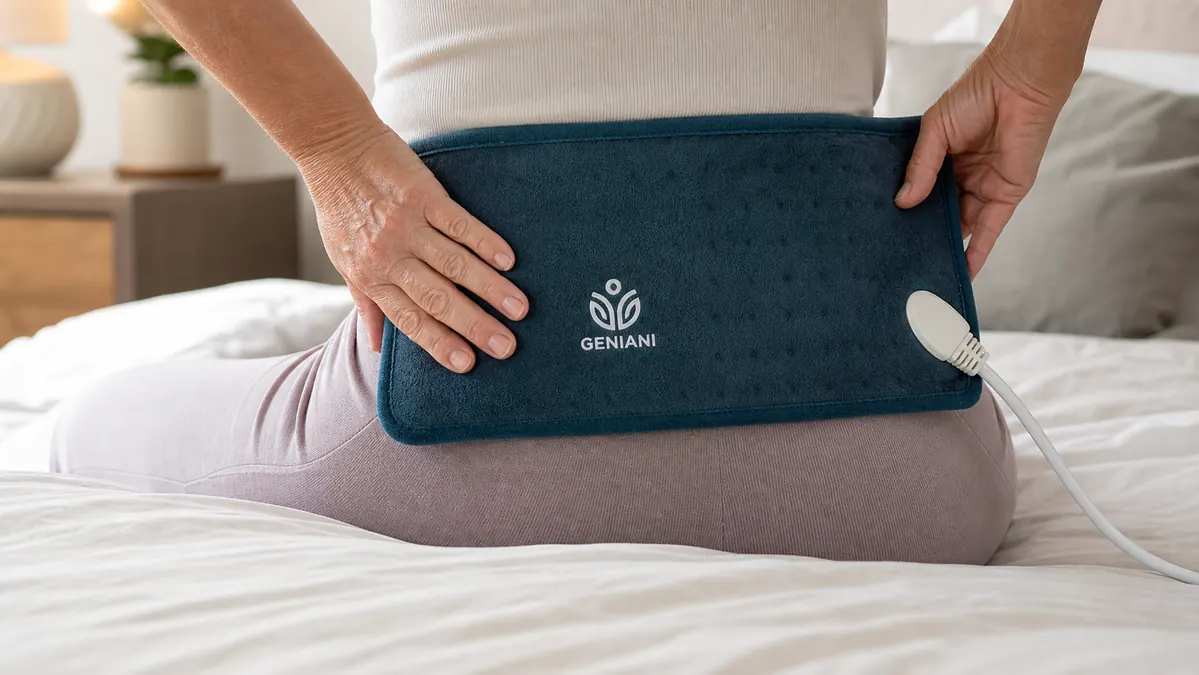
A basic electric heating pad is all you need to run the routine below. The GENIANI model I use heats quickly, shuts off on its own as a safety net, and drapes flat over a stiff lower back without folding. It has been my dependable warm helper for months.
Amazon Check Today's Price on Amazon →Step 1: Clear the plan with your doctor or physical therapist first
Before you put any heat on a recurring ache, have someone who knows your history look over the plan. That sounds like the kind of thing an article says and nobody does, but it matters more here than I expected. Heat widens blood vessels, so if you are on a blood thinner, or diabetes has dulled the feeling in your skin, or you have a place that is swollen rather than stiff, heat can do more harm than good. Swelling and a fresh injury generally want ice, not heat, and the two get mixed up all the time.
I am not a doctor and I am not handing you medical advice. What I can tell you is that my therapist put her hand on my lower back, ruled out anything inflamed, and gave me the all clear for short 15 to 20 minute sessions. That one conversation changed how confidently I used the pad. If your pain came on after a fall, or it stays sharp instead of aching, or you feel any numbness or tingling, see someone before you reach for heat. If your doctor has cleared heat for your particular ache, the rest of this routine becomes very straightforward.
Step 2: Start on the lowest setting and time it for about twenty minutes
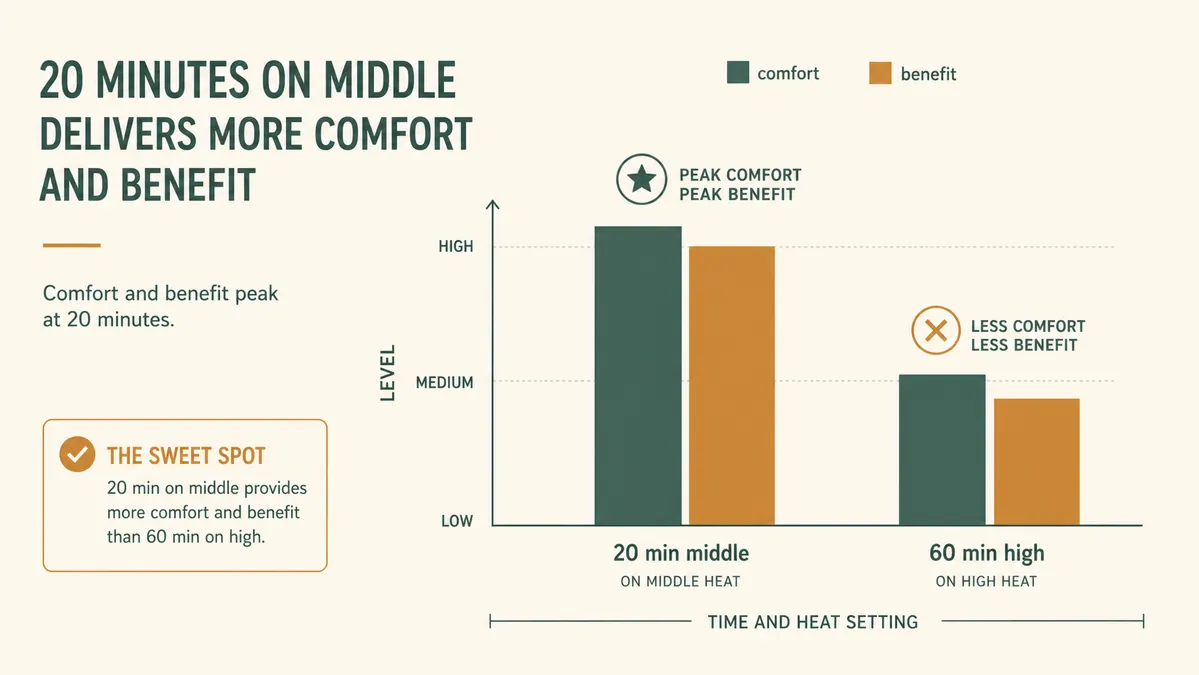
The biggest mistake is cranking the pad to its highest setting because it feels better faster. High heat feels good for the first few minutes, then your skin pays for it later, sometimes with redness that lasts into the evening or a burn you do not notice until you stand up. The GENIANI pad has a range of settings, and I almost never go above the middle ones. I start on the low end, let it warm up for a couple of minutes while I get settled, and only nudge it up one notch if the heat does not feel like it is reaching the muscle.
Set a timer for about 15 to 20 minutes and treat it like a hard stop, not a suggestion. Heat works because the muscle relaxes and blood moves in, and that benefit tops out fairly quickly. Leaving a pad on for an hour or sleeping on it overnight is where the safety problems come from, especially if you have less sensitive skin, because you will not feel the warning signs until the damage is done. I set a quiet timer on my phone, or I let the pad use its automatic shut off, which this model has and which I would not go without.
It helped me to understand what the heat is actually doing, because then the timing made sense. Warmth does not fix the underlying arthritis or heal the muscle in twenty minutes. What it does is relax the tight fibers so they stop guarding, draws oxygen-rich blood into the area, and eases the stiffness long enough for you to move more freely. That is why a shorter session on a comfortable setting beats a longer, hotter one. Once I stopped chasing the strongest possible burn and aimed for a steady, pleasant warmth across my low back, my body responded better and my skin stayed healthy.
Step 3: Place it over the muscle, not directly on the bone
Where you put the pad decides whether it helps or just feels warm. For a tight lower back, I lay the pad so it covers the band of muscle on either side of the spine, not straight over the bony ridge in the middle, because the heat travels better through the meat of the muscle. For shoulder tension, I drape it over the trapezius, the muscle that runs from the base of the neck out to the edge of the shoulder, and I leave my neck bone itself out of the heat.
The size and shape of the pad matter here too. Mine is a twelve by twenty four inch rectangle, which is big enough to cover the width of a low back or the whole shoulder without me having to slide it around. I sit on the edge of the bed or in my reading chair, never right on top of the pad, so my weight does not press it into one spot and fold the wire. Lie it flat or drape it gently so the heat spreads evenly and the pad stays in contact with your skin the whole time.
If the pad has a moist heat option, or you add a slightly damp cloth underneath, the moisture carries the heat a little deeper and feels kinder on bony shoulders. That is one reason I lean on mine more in the colder months, when my shoulders tighten up the most. In the summer heat I use it exactly the same way, I just keep the setting lower and the room cooler, and the relief is the same.
Step 4: Keep a light barrier between the pad and your skin
I learned this one the slow way. The instructions say the pad is designed for direct contact, and it is, but my own skin is thinner and more fragile than it was twenty years ago, so I lay a light cotton towel or an old t shirt between the pad and my skin most of the time. The heat still comes through clearly, and it protects the areas where my skin is delicate, like right over the shoulder bone or the hips. I keep one folded hand towel hanging over the back of the chair just for this, so I never have to go hunting for it.
Check your skin in the mirror when you take the pad off. If you see a bright red patch that does not fade within a few minutes, or any blistering, you had the heat too high or on too long, and you need to drop the setting and shorten the session next time. A soft, healthy warmth afterwards is the goal. Your skin should look about the same as it did before, just a little pinker for a short while. If you ever do not feel the heat the way you think you should, stop and check, because that can be the first sign a nerve or sensitivity issue needs a doctor's look.
Step 5: Move gently right after, and space your sessions out
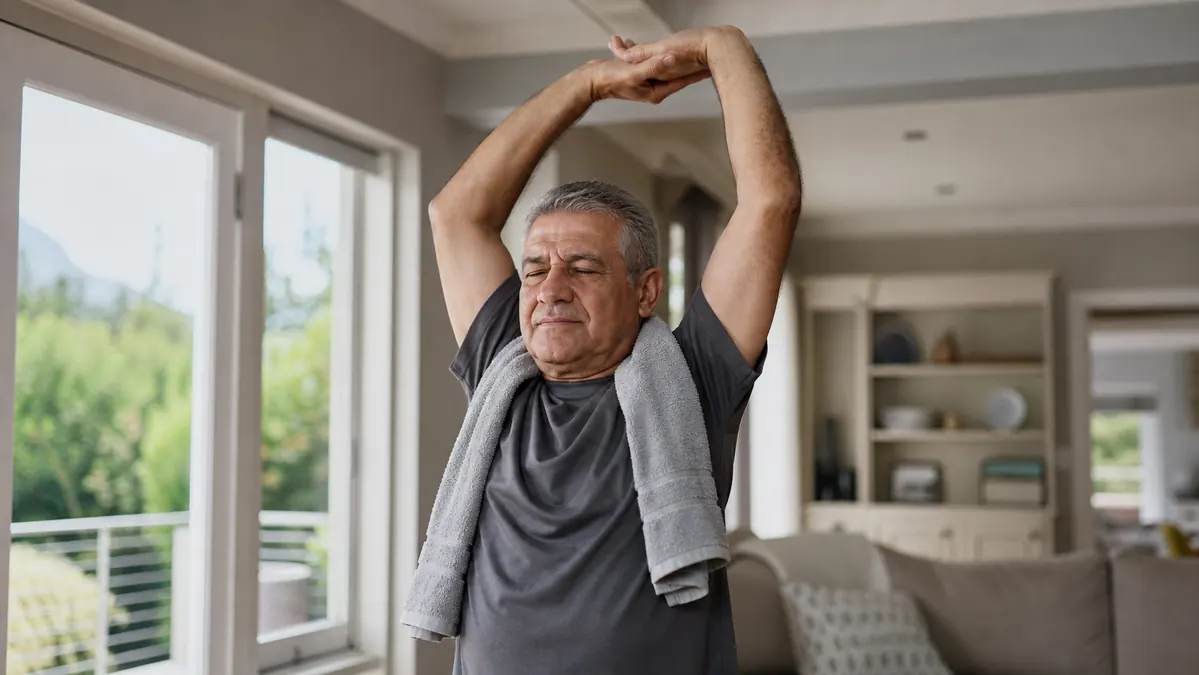
The whole point of the heat is to get you moving, not to keep you lying still. In that first twenty minutes I can feel the tightness loosen, and the best thing I do is stand up slowly and take a short walk, swing my arms, or do the gentle stretches my therapist showed me while the muscle is still warm and pliable. A warm muscle accepts a stretch better than a cold one, so the window right after the pad comes off is when a little movement goes the furthest.
Space your sessions out with a break in between. I do one in the morning to get going and one in the evening before bed, never back to back, and never so often that my skin stays red all day. I also paid attention to how I slept, because a sore back is often a restless-nights problem in disguise. A small pillow under my knees at night keeps my low back from arching, and I notice I wake up less stiff. If twenty minutes twice a day is not easing the ache within a couple of weeks, the answer is not a hotter pad or a longer session, it is a conversation with your doctor about what is actually going on.
What Else Helps
Heat on its own got me partway, and the rest came from a few simple additions that cost little and take seconds. I follow the heat with a few gentle stretches while the muscle is still warm. I keep a small massage tool for the spots heat does not quite reach, because the two cover different ground, heat loosens a whole area while the massager works the one stubborn knot. And I use the pad first thing on the days my back is stiffest, paired with a slow walk around the kitchen while I wait for the coffee.
I also learned to match the tool to the moment, and that is where the question of dry versus moist heat comes in. A dry electric pad suits my low back and shoulders because it is quick, stays hot, and does not drip on my clothes. A moist heat pack holds warmth longer and feels heavier, which some people prefer for the neck. If you want to see how the two stack up before you choose, I spelled out the differences here, and for my full thoughts after months of daily use you can read my honest heating pad review. Whichever way you go, the safe 20-minute routine above applies to all of them.
The biggest mistake is cranking the pad to its highest setting because it feels better faster. Twenty minutes on a middle setting does more than an hour on high.
Run the Safe 20-Minute Routine Tonight
Set the pad on a middle setting, put a thin towel between it and your skin, and let the automatic shut off watch the clock for you. That is the entire routine, and it is exactly why I reach for my GENIANI pad every morning and evening.
Amazon Check Today's Price on Amazon →