
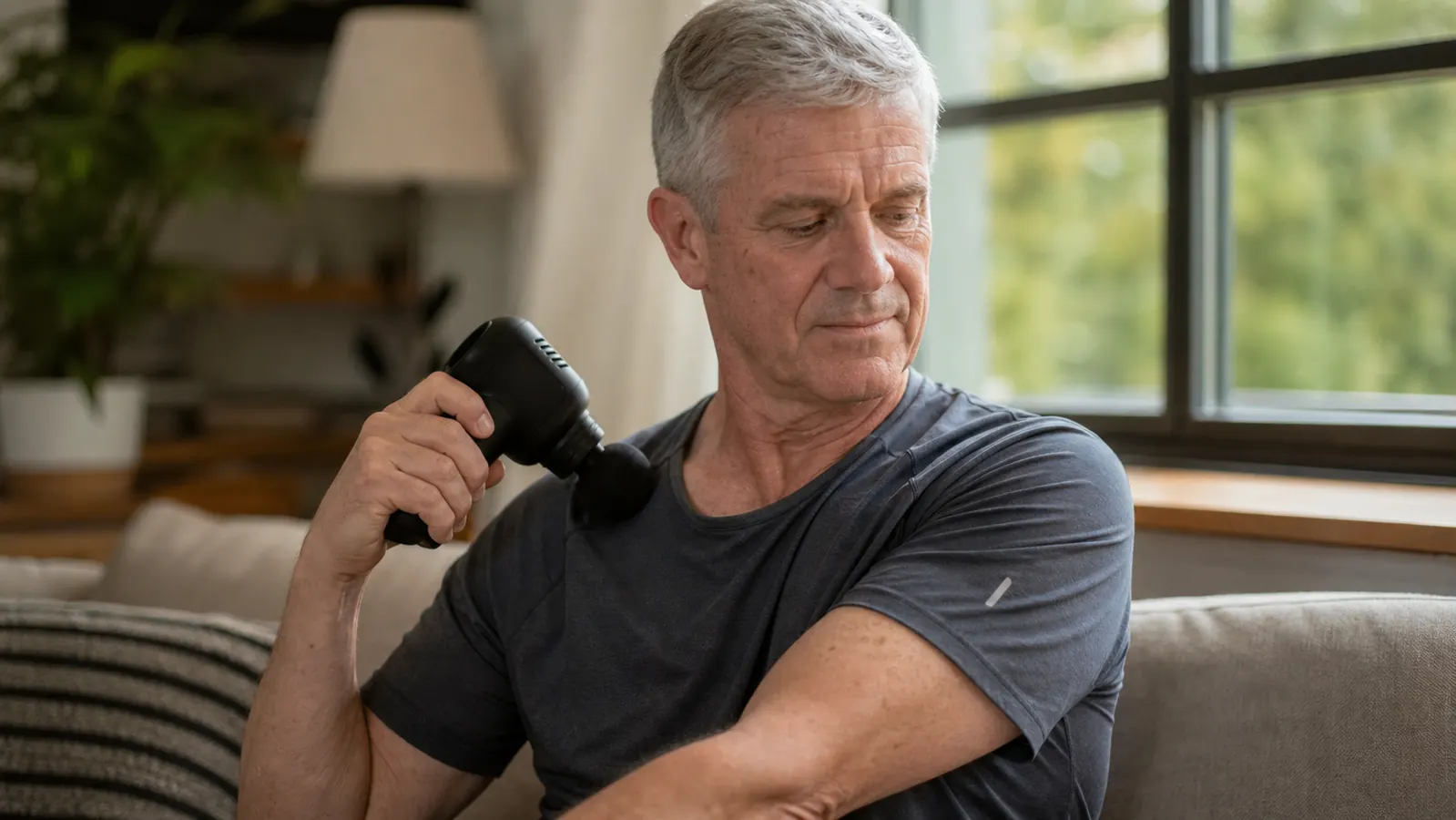
If your legs feel tight after a walk, or your shoulders knot up by evening, you have probably heard the term massage gun thrown around. It sounds like something for gym people and athletes, not for someone who just wants to feel a little more comfortable at the end of the day. I felt the same way when my daughter handed me hers and said, use it gently and you will be surprised. I was. So let me walk you through how to use a massage gun on sore muscles the safe way, especially if you are older, stiff, or new to any of this.
Before anything else, a word I have to say: talk to your doctor first. If you take blood thinners, have varicose veins, a recent injury, or any heart condition, a percussion massager may not be right for you. This is a tool to feel better, not a treatment for a health problem. Ask your doctor, then come back and follow these steps.
A Gently Designed Massage Gun to Start With
The TOLOCO massage gun comes with several soft head attachments and low speed settings, which makes it a sensible first choice for a beginner. If you are ready to try percussion massage at home, this is a good place to start.
Amazon Check Today's Price on Amazon →Step 1: Choose the Softest Attachment and the Lowest Speed
Most massage guns, the TOLOCO included, come in a small case with a handful of heads. For a first session, ignore the fancy ones and pick the softest round ball head. The round ball spreads the pressure over a bigger area, which is far kinder to a tender body than a narrow pointy tip. Save the pointy head for knotted spots later, if ever.
Then set the speed to the low setting, or the number one if that is how the dial works. This is the biggest mistake beginners make, they grab a muscle massager, set it to full power, and it feels like being beaten with a hammer. Gentle wins every time. You can always build up slowly. Going too hard too soon is how people hurt themselves and swear off massage guns forever.
Hold the gun loosely, not in a death grip. Let the machine do the pulsing. Your arm should feel relaxed, because tension in your hand travels straight into the muscle you are trying to soothe. This is meant to be a calm, easy session, not a chore.
Step 2: Warm Up the Muscle With Your Hand First
Take a full minute to rub the sore spot with your palm, a light kneading motion, before you turn the machine on. It sounds odd, but this tells your body something safe is happening and gets blood moving into the area. Cold, tight muscle being suddenly pulsed is a shock. Warm, loose muscle responds far better.
If you have a heating pad or a warm towel handy, five minutes of gentle heat before you start makes the whole session more comfortable. Warmth and percussion work well together. I often sit with a heat pack on my calf while I decide which spot to work on, which keeps the whole experience slow and pleasant.
Step 3: Use Gliding Strokes, Not One Long Stamp
When the gun is on, do not hold it frozen on one lonely knot for two minutes. That is the fastest way to bruise yourself. Instead, glide the head slowly over the muscle in long, gentle passes, up and down the calf or thigh, moving continuously. Think of it like a very fast kneading hand rather than a drill.
Keep each pass light. You should feel a pleasant vibration, never sharp pain. The old saying that no pain means no gain does not belong here. If a spot hurts under the gun, ease off the pressure or move past it. Aching and bruising after a session means you used too much force, not that you did it right.
Step 4: Keep It to Two or Three Minutes Per Muscle Group
You do not need a marathon. Two to three gentle minutes on a calf, then the same on the other calf, is plenty for a first session. Overworking one area is a common mistake, and it leaves you sore in a whole new way. Short, gentle, and frequent beats long and hard every time.
Stay away from the boney spots and the joints. Do not press the gun into your kneecap, your elbow, your hip bone, or straight down the front of your shin where the bone sits close to the surface. The tool is built for soft muscle tissue. Pressing it into bone is how people come away bruised and disappointed.
The neck is a special case. If you use it there at all, keep it on the fleshy upper shoulder and upper traps, never on the front or side of the neck where the arteries run. When in doubt, stop. Getting one shoulder loosened is not worth a trip to urgent care.
Step 5: Drink Water and Rest Afterward
Percussion massage works by shaking up the tissue and boosting circulation, much like a deep tissue massage. That means it can leave you a little thirsty and sometimes a touch tired afterward. Have a glass of water and sit quietly for a few minutes. Give your body a moment to settle before you jump back into your day.
Some people feel light soreness the first day or two, the same kind you get after trying a new exercise. That is normal if it is mild. If it is sharp, or you see a bruise, back the pressure down next time and keep each session shorter. You are learning your own comfort level, and that takes a little practice, which is perfectly fine.
What Else Helps Alongside a Massage Gun
A massage gun is one useful tool, but no single gadget does everything. Gentle daily walking, staying hydrated, and a few slow stretches keep the muscles from tightening back up. Many people pair percussion with an electric heating pad afterward to keep the area warm and relaxed for the rest of the evening.
If your pain is more of a sharp, nerve-like feeling rather than general soreness, a percussion massager may not be the right answer, and I say that honestly. In that case a TENS unit works quite differently and is worth reading about. Tools are helpers, not magic. The right one for the right ache is the whole game.
Two to three gentle minutes on a muscle is plenty. Short, gentle, and frequent beats long and hard every time.
There is a reason people compare this type of massage gun to the fancier brands. The tech is no longer reserved for expensive machines. A careful, low speed percussion massager can loosen tight legs and shoulders right in your own living room, once you learn to use it gently. And that is the whole point of this guide, to help you start off on the right foot instead of quitting after one rough try.
Take it slow, listen to your body, and check in with your doctor before you begin. If you follow these five steps, your first session with a muscle massager should feel like a comfort, not a chore. And if a gentle percussion massage helps you move a little easier at the end of the day, that is a good thing worth keeping around.
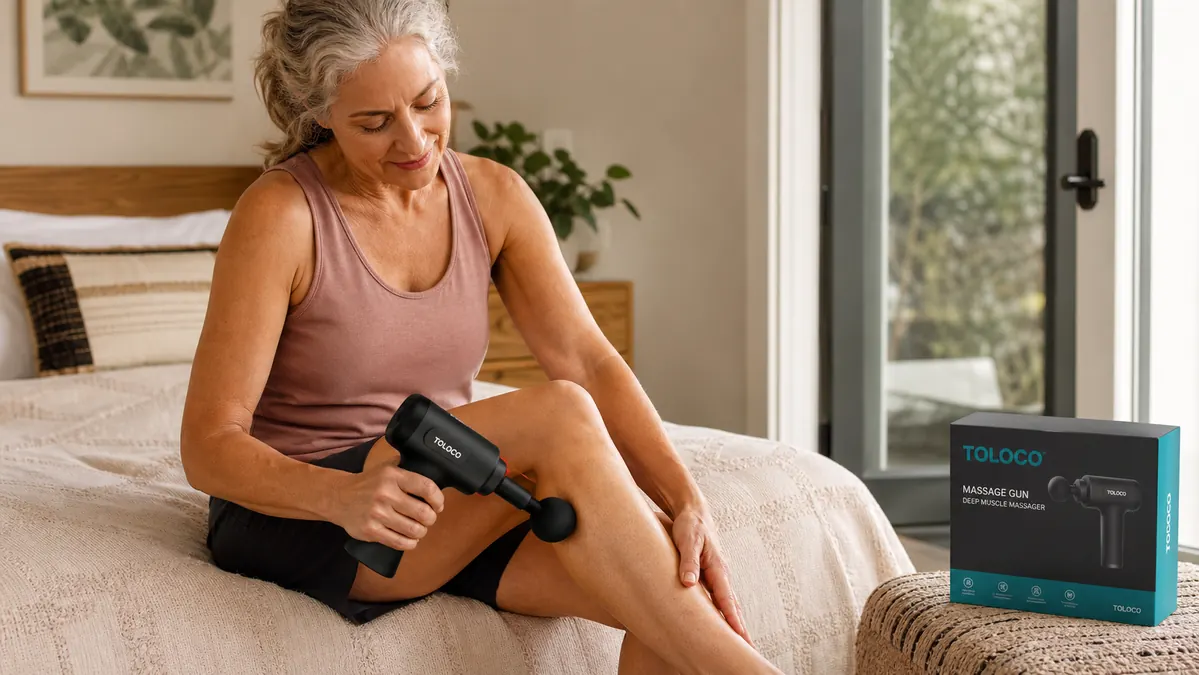
The Mistakes I Made So You Do Not Have To
I would be lying if I said I got this right on the first try, so let me save you the trouble I went through. My first session I used the gun on full power for ten straight minutes on one calf, because I figured more was better. I limped for two days. That is exactly the error that gives massage guns a bad name, and it has nothing to do with the machine. It was me using it like a hammer when I should have used it like a gentle hand. Learn from my lumpy first week instead of repeating it.
The second mistake was using it on a completely cold, tense muscle without any warm up. I pressed the head straight into a shoulder that had been tight since morning, and the shock made it worse for a while before it got better. Now I always warm the area first, with my hand or a few minutes of heat, and the difference is night and day. The muscle opens up and the percussion glides instead of fighting it.
The third mistake is the one almost everyone makes, holding the gun perfectly still on one spot for a long time because it feels so good. That feels wonderful for about a minute, and then it bruises. Keep it moving in slow passes, and if you want to spend more time on one area, drop to a lower speed and lighter pressure instead of dwelling at full power. Gentle, moving pressure beats a hard stare every time.
Finally, I learned to time my sessions badly at first. I used mine right before bed and then wondered why I felt buzzy instead of sleepy. For me, a late afternoon session works best, a few hours before bed, so my body settles down naturally. You may be different, but it is worth paying attention to when a session helps your evening and when it leaves you wired instead of relaxed.
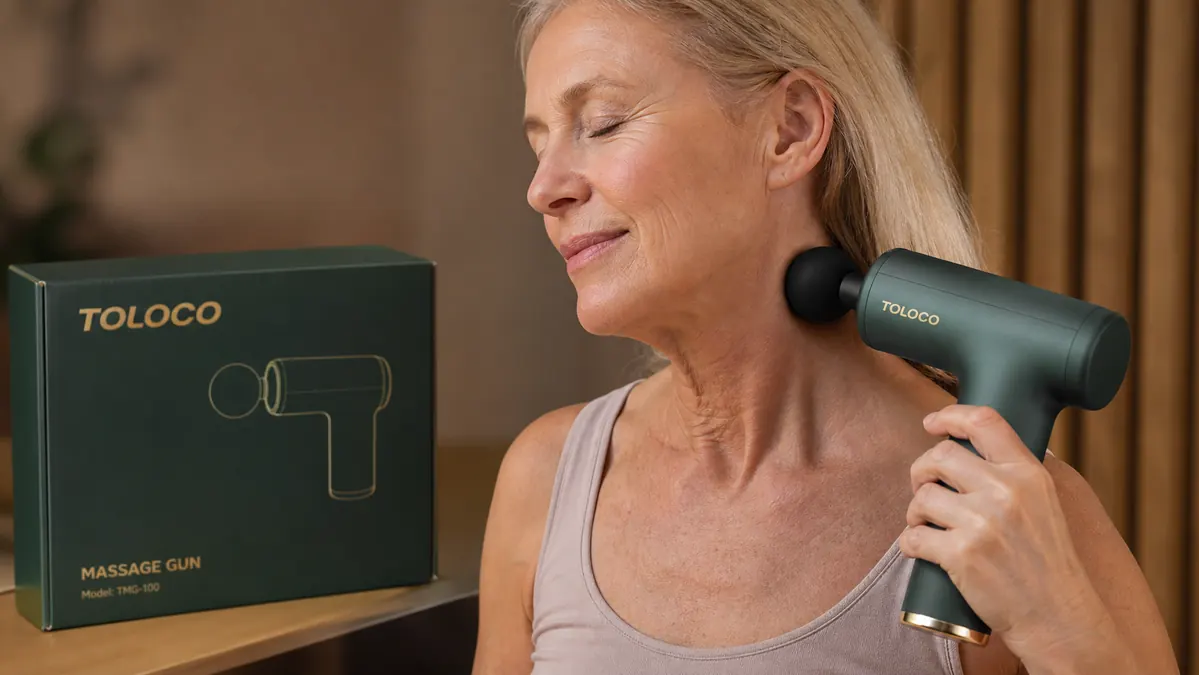
How to Tell You Are Using It Right
The signs of a good session are quiet and easy to miss. The muscle you worked on feels looser and warmer, and when you stand up or reach for something, that particular movement is easier than it was before. You feel relaxed, not drained. There is no sharp pain during the session and no new bruise or ache the next day. Mild muscle soreness, the kind you get after trying a new exercise, is normal for the first day or two. Sharp pain, a bruise, or a feeling that you went too hard is a clear sign to dial everything back next time.
You should also be able to carry on a comfortable conversation or watch television while you do it. If the machine feels overwhelming or you have to grit your teeth, the pressure or the speed is too high. Back it down. The goal is comfort, and a session that leaves you tensed up is missing the point entirely.
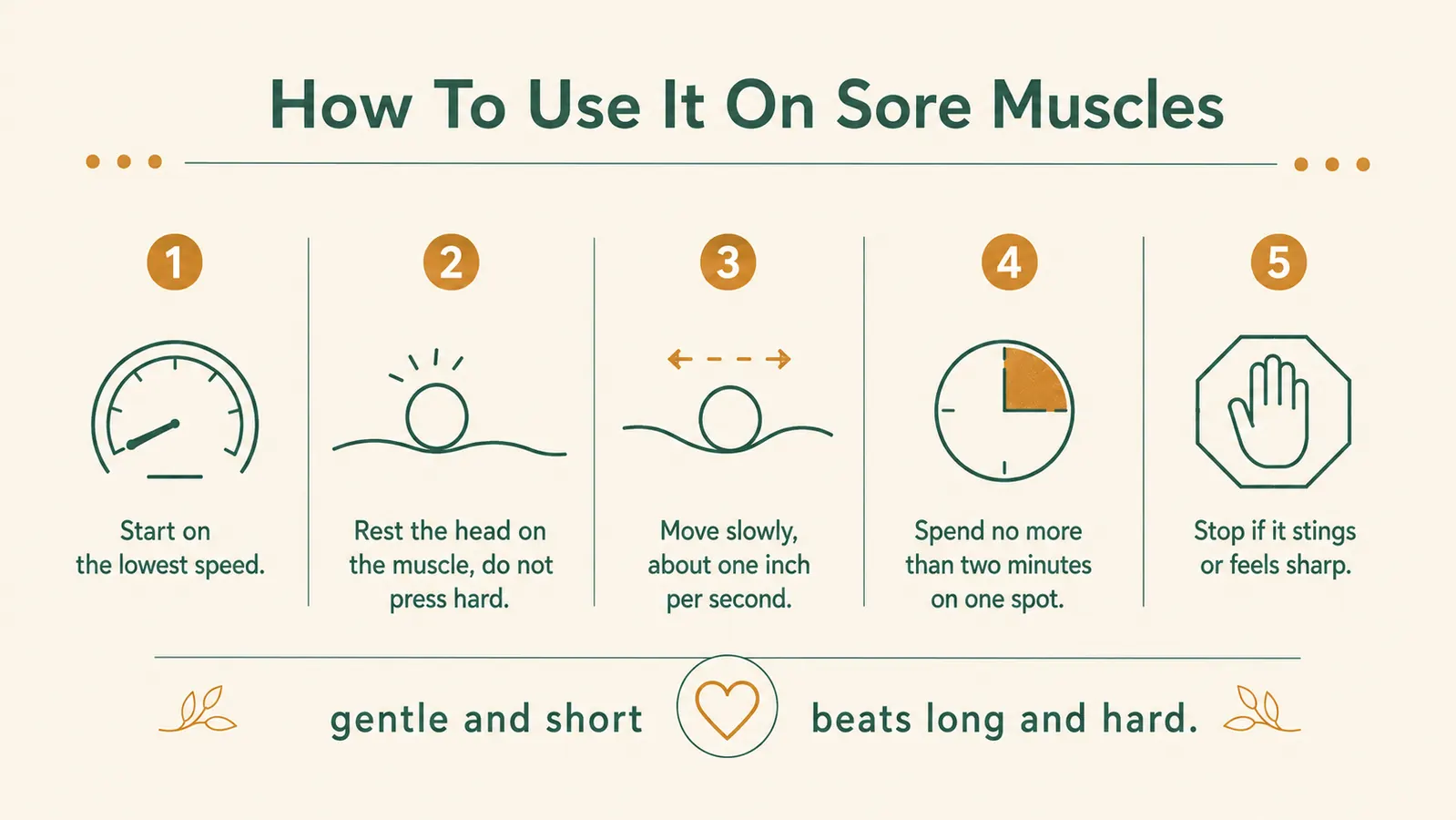
A Simple First Routine to Copy
If you want something concrete to follow the first time, here is a routine you can steal. Sit somewhere comfortable. Warm up your calf with your hand for a minute. Pick the soft ball head and the lowest speed. Glide over the back of your calf for two to three minutes, moving slowly the whole time. Switch legs and repeat. Finish with a glass of water and five quiet minutes. That is it. There is no need to chase every muscle in your body on day one, and you should not. Start with the one place that bothers you most and get used to the tool before you think about adding more.
After a few gentle sessions you will have a sense of how your body responds, and you can slowly build from there. Over the following week you might add your shoulders, your lower back, or the tops of your thighs. Keep every new area short and gentle at first, the same way you handled your calf. There is no competition and no schedule to keep. Go at the pace that makes you feel better, not the pace that impresses anyone else.
When a Massage Gun Is Not the Right Tool
Honesty matters in a guide like this. A massage gun is great for general muscle tightness and everyday soreness, but it is not for everything. If your pain is sharp, shoots down a limb, or follows a nerve, stop and talk to your doctor. If you have a recent injury, a bruise you are watching, varicose veins, or you take blood thinners, get professional advice before you start. And if a muscle feels deeply injured rather than simply tight, rest it instead of pounding it. The gun is a comfort tool for everyday stiffness, not a treatment, and knowing when not to use it is half of using it well.
I also want to be plain that a massage gun does not take the place of everyday movement. The people I know who feel best do not wait until they are stiff to think about their muscles. They move a little during the day, stretch, take their walks, drink water, and reach for the gun in the evening as one part of a calm routine rather than the only thing they do. Trying to fix a week of sitting with one ten minute session is asking too much of any tool.
Ready to Try Percussion Massage the Gentle Way?
If your doctor has given you the green light and you want a user friendly first massage gun, the TOLOCO model with its soft heads and low speeds is a solid, affordable place to begin. When you are ready, check today's price on Amazon.
Amazon Check Today's Price on Amazon →